Why Malta
Malta is not on most shortlists at first. It arrives later, after the research, after the comparison, after the numbers start to make more sense than anywhere else in the Mediterranean.
A small EU member state, English-speaking, with a regulatory framework built for private education and a student population growing faster than the institutions that serve it.
Qualifications sit within the Bologna framework. ECTS credits, European recognition, MQF-aligned levels. English is a national language, one of two official languages of Malta. Tuition plus living costs run 17 to 20 percent lower than the United Kingdom or Ireland. And Malta consistently ranks among the safest countries in Europe.
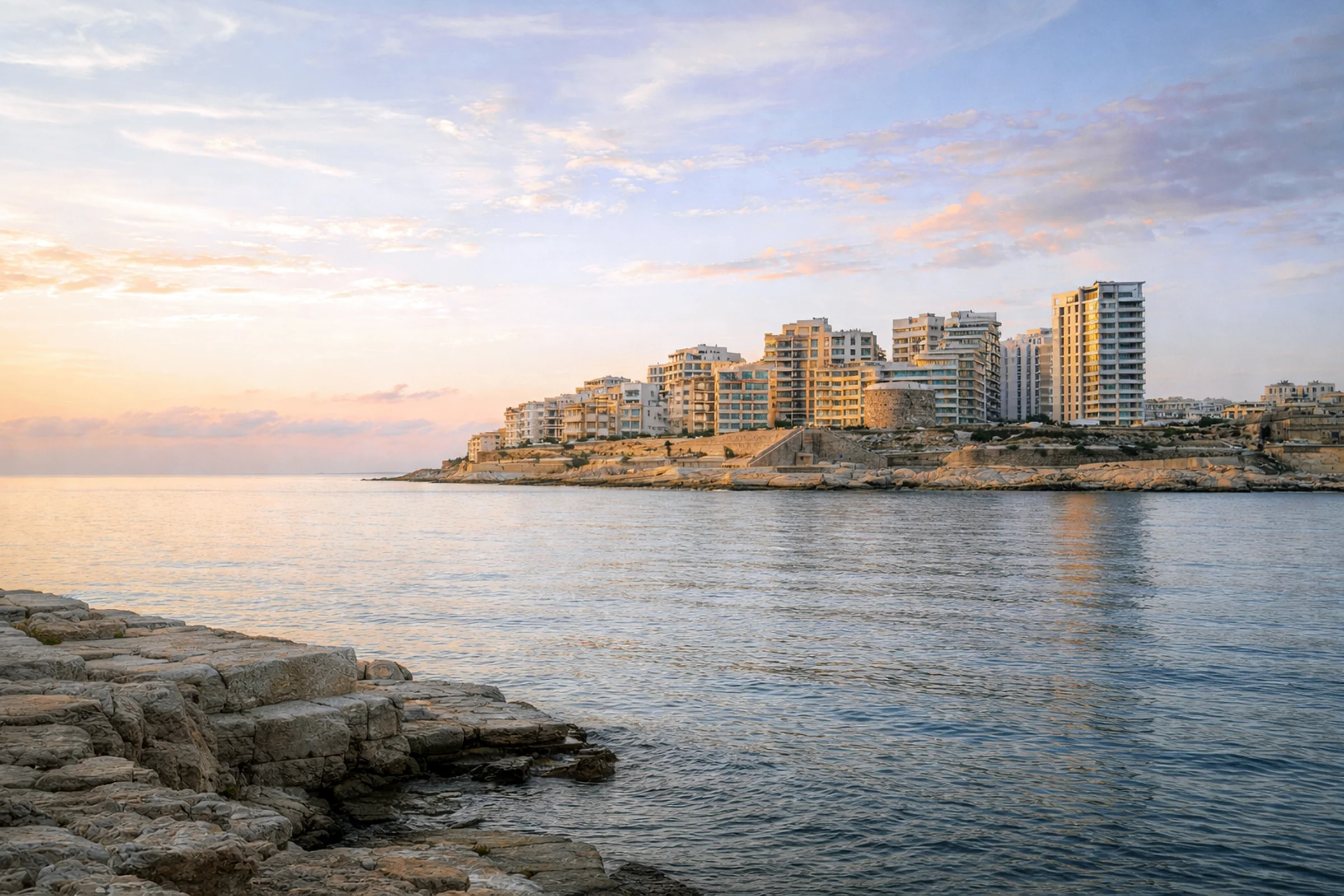
Three hundred days of sunshine. A coastline that fits between lectures. A social scene built on a mix of nationalities, Maltese, Italian, British, Scandinavian, Indian, African, in a country small enough that the entire community is accessible. The median age of Malta's foreign population is 32. This is not a retirement island. It is young, working, and international.
The demand exists.
Already Here
158,000
foreign residents live in Malta. They work in financial services, iGaming, technology, maritime, and professional services. They are settled. They are building careers. And many of them need qualifications, professional development, postgraduate credentials, industry certifications, that they cannot pursue without leaving the island.
37%
of higher education enrolments are international. That figure grew 27% in a single year. Enrolments from individual source countries are growing at triple-digit rates. The demand curve is not flattening.
80,946
students enrolled across 33 licensed English language schools in a single year. Italy is the largest source market at nearly 25%.
A Market That Is Still Being Built
Malta's private education sector is not saturated. It is early. The regulatory framework is established, the demand signals are clear, and the institutions that will define the next decade of Maltese higher education have not all been founded yet.
The question is not whether students will come. They are already here, and more are arriving every year. The question is what it takes to build an institution that meets them.
Start a Conversation
Tell us about your education project. We will give you an honest picture of what Malta offers and how EducationOne can help.